FREEFIX®

ulnar shortening system

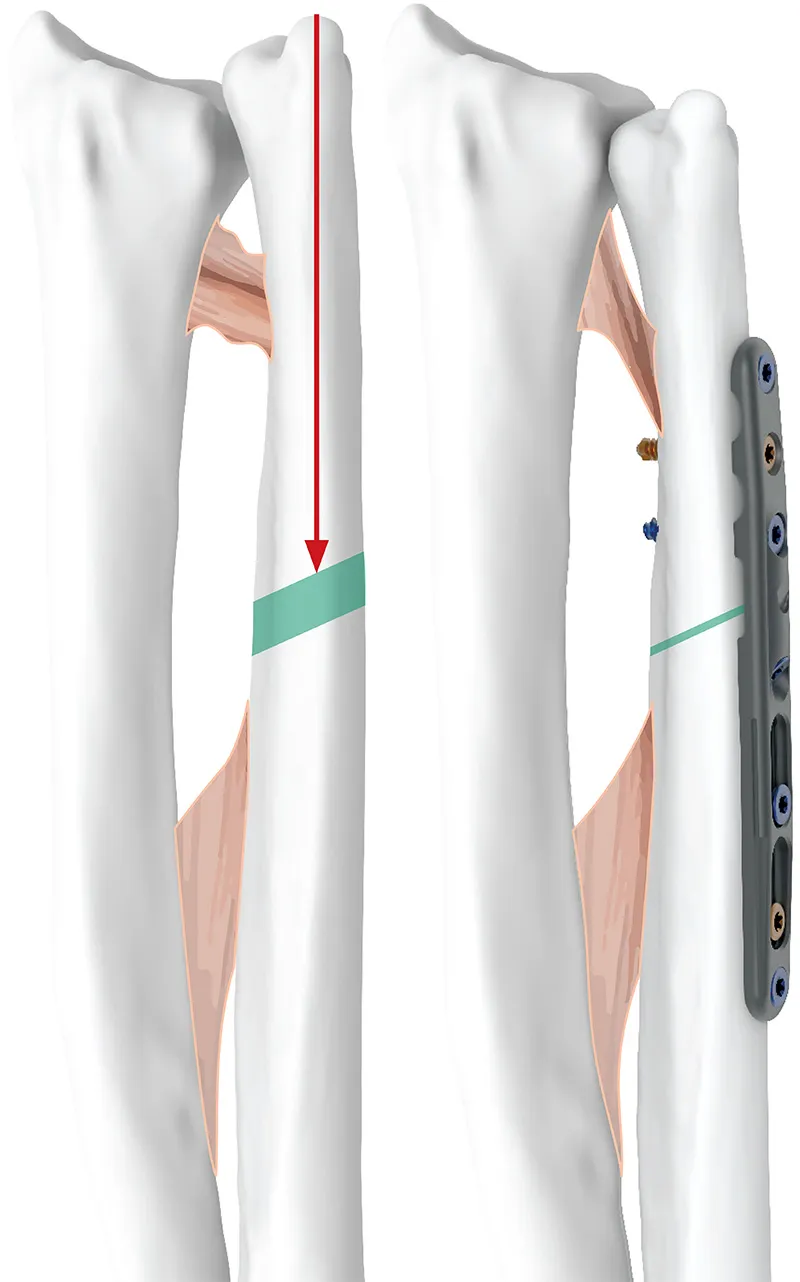
The freedom to perform a distal or proximal osteotomy based on clinical need

Shortening options to address specific pathology

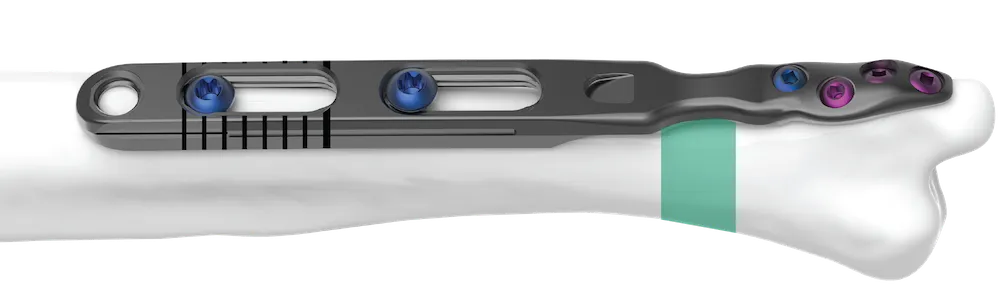
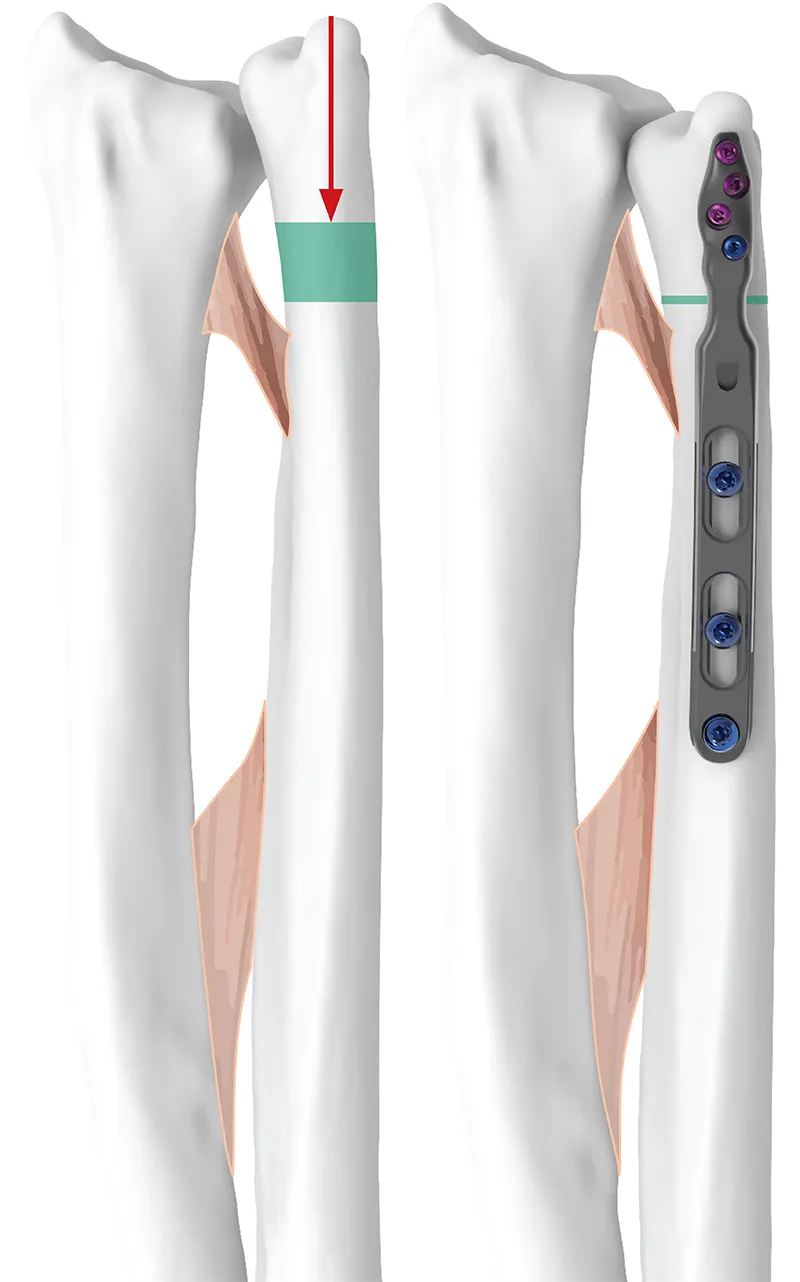
Distal Osteotomy

Metaphyseal location facilitates healing and maintains normal distal interosseous ligament tension

Metaphyseal location facilitates healing and maintains normal distal interosseous ligament tension

Proximal Osteotomy

Increases tension on distal interosseous ligament to enhance DRUJ stability

Increases tension on distal interosseous ligament to enhance DRUJ stability

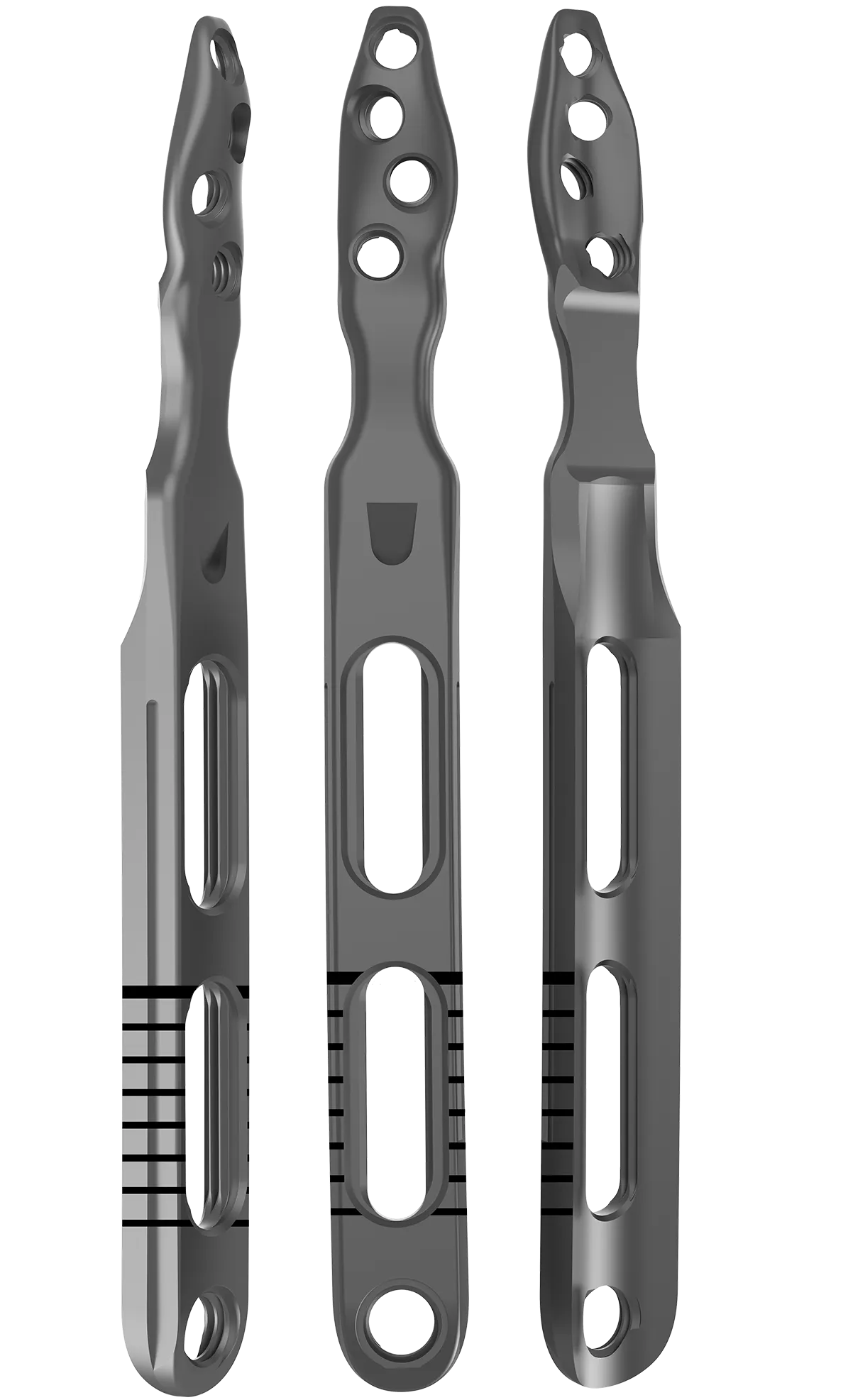
Plate features

FREEFIX USS 1

Anatomic head and neck for ideal distal placement

1 of 8

PROTEAN® bending feature to adjust neck angle

2 of 8

Plate notch for compression forceps

3 of 8

Undercuts for saw blade clearance

4 of 8

FREEFIX® slots accommodate both compression and locking screws at any position within the slot

5 of 8

FREEFIX® slots accommodate both compression and locking screws at any position within the slot

6 of 8

Guide rails to secure cutting guide

7 of 8

Laser marking every 2mm to set osteotomy length

8 of 8
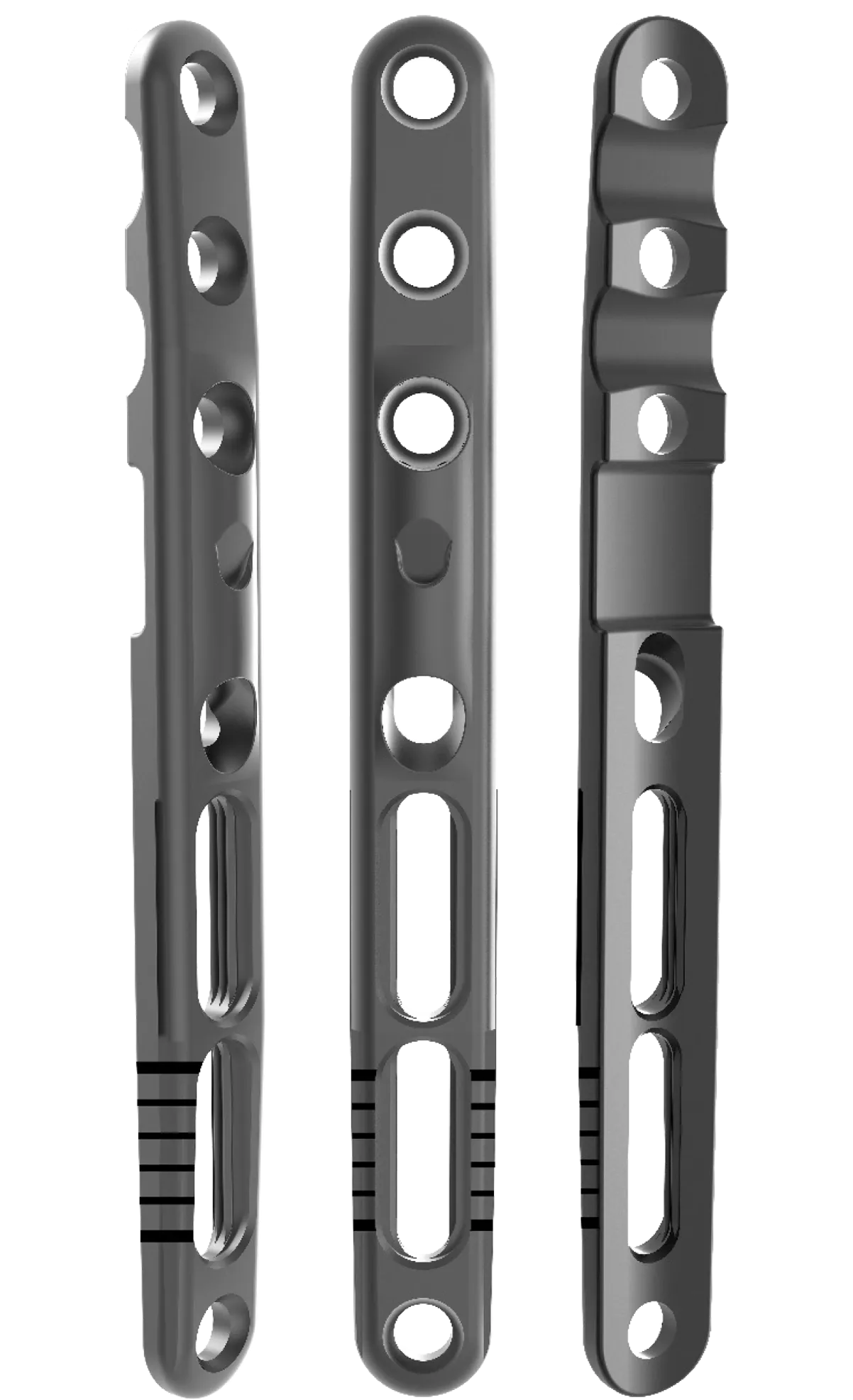
FREEFIX USS 2

Plate notch for compression forceps

1 of 7

Oblique screw can be lagged using the AO principles of internal fixation

2 of 7

Undercuts for saw blade clearance

3 of 7

FREEFIX® slots accommodate both compression and locking screws at any position within the slot

4 of 7

FREEFIX® slots accommodate both compression and locking screws at any position within the slot

5 of 7

Laser marking every 2mm to set osteotomy length

6 of 7

Guide rails to secure cutting guide

7 of 7
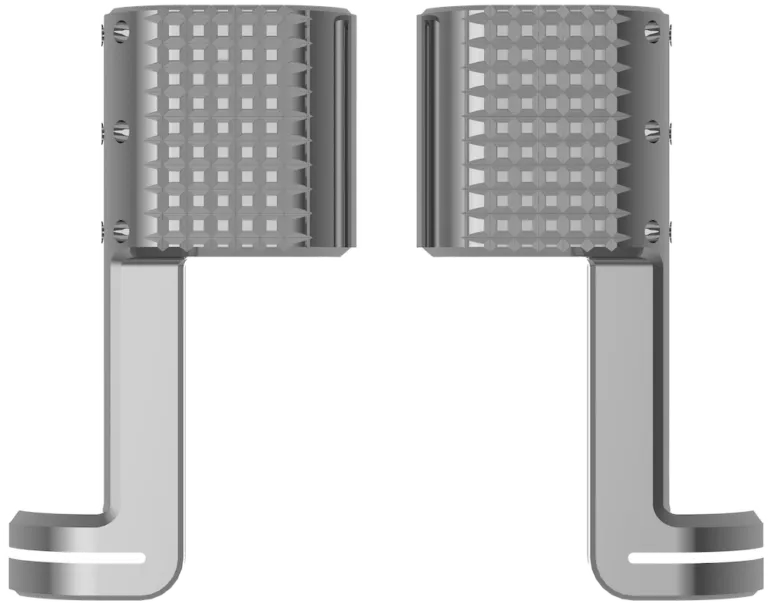
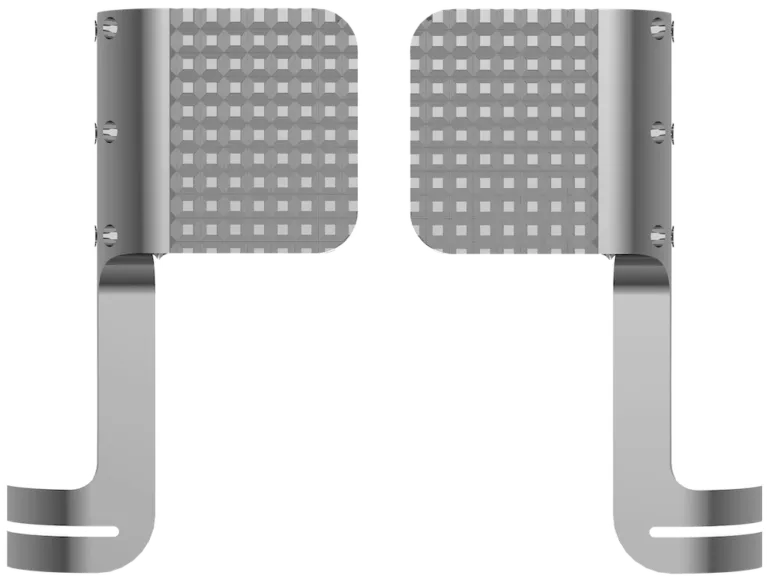
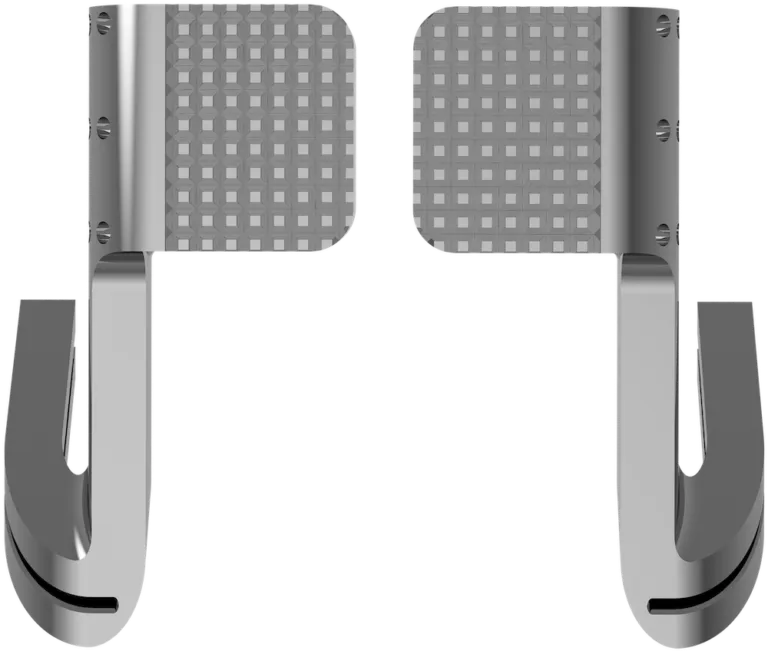
Distal and proximal cutting guides allow blade access from either side of the plate

Distal Plate Guide

Transverse Cut

Cutting Guide Distal, including left and right

Distal Plate Guide

Oblique or Transverse Cuts

Cutting Guide Proximal, including left and right
Cutting Guide Oblique, including left and right

Streamlined procedure that maintains rotational stability

Apply the plate to the bone with the proximal screws in the most proximal slot position.

Apply the plate to the bone with the proximal screws in the most proximal slot position.

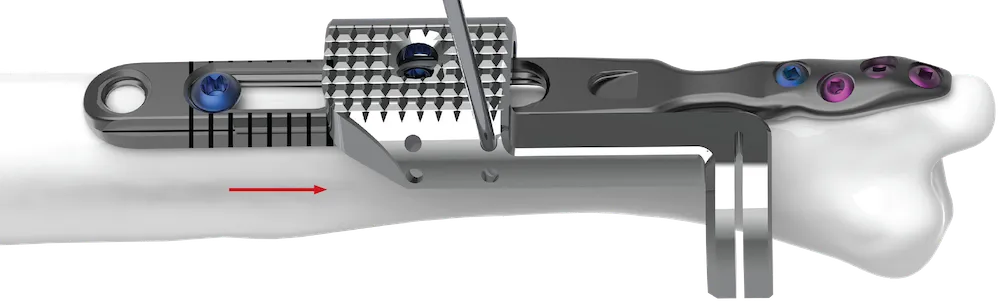
Slide the cutting guide to the most distal position, secure with a k-wire(s), and perform the first cut.

Slide the cutting guide to the most distal position and secure with a k-wire(s). Perform the first cut.

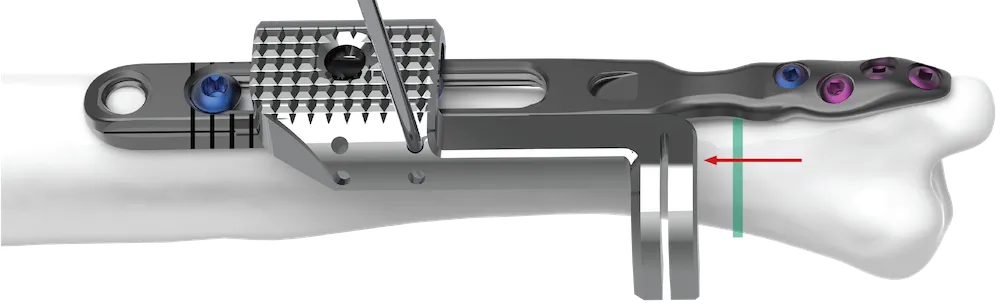
Slide the cutting guide proximally to the desired shortening length, re-secure with a k-wire(s), perform the second cut, and remove the cutting guide.

Slide the cutting guide proximally to the desired shortening length and resecure with a k-wire(s). Perform the second cut and remove the cutting guide.

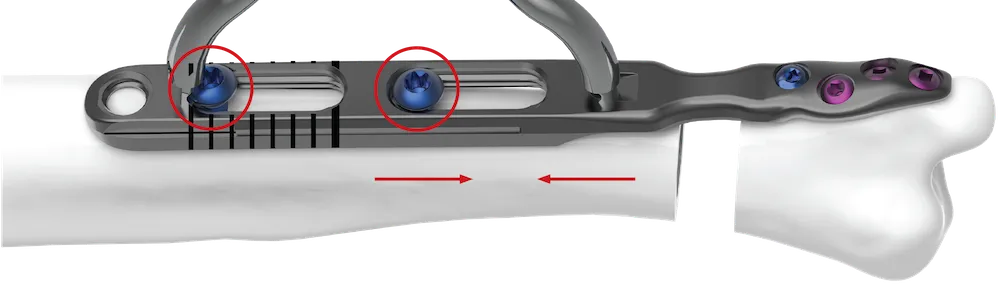
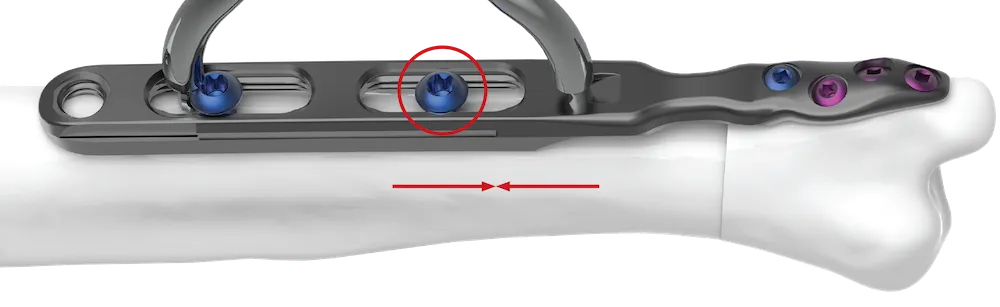
Remove the bone wedge, loosen the slot screws and compress the fragments using the compression forceps.

Remove the bone wedge, loosen the slot screws and compress the fragments using the compression forceps.

Retighten the most distal slot screw while maintaining compression with the forceps.

Retighten the most distal slot screw while maintaining compression with the forceps.

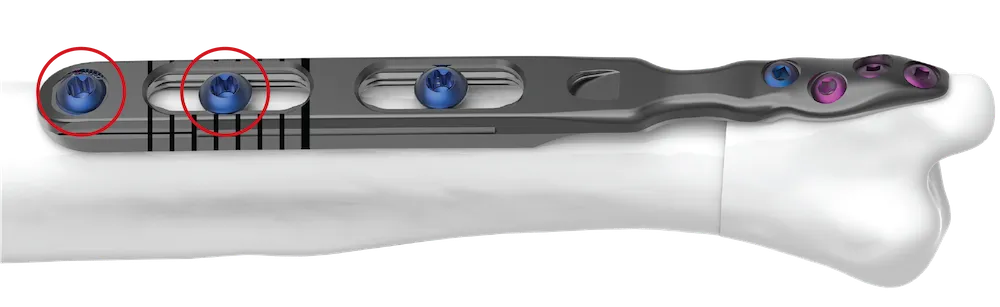
Remove the compression forceps, retighten the proximal slot screw and place the final screw in the most proximal hole.

Remove the compression forceps, retighten the proximal slot screw and place the final screw in the most proximal hole.

360º Construct Rotation (Distal)

(Drag to rotate)


360º Construct Rotation (Proximal)

(Drag to rotate)